
The Future of Protein in China Has 1,000-Year-Old Roots
What fake meat, fermentation tanks, and a 1,000-year-old Buddhist kitchen tradition can tell us about where plant-based food is heading
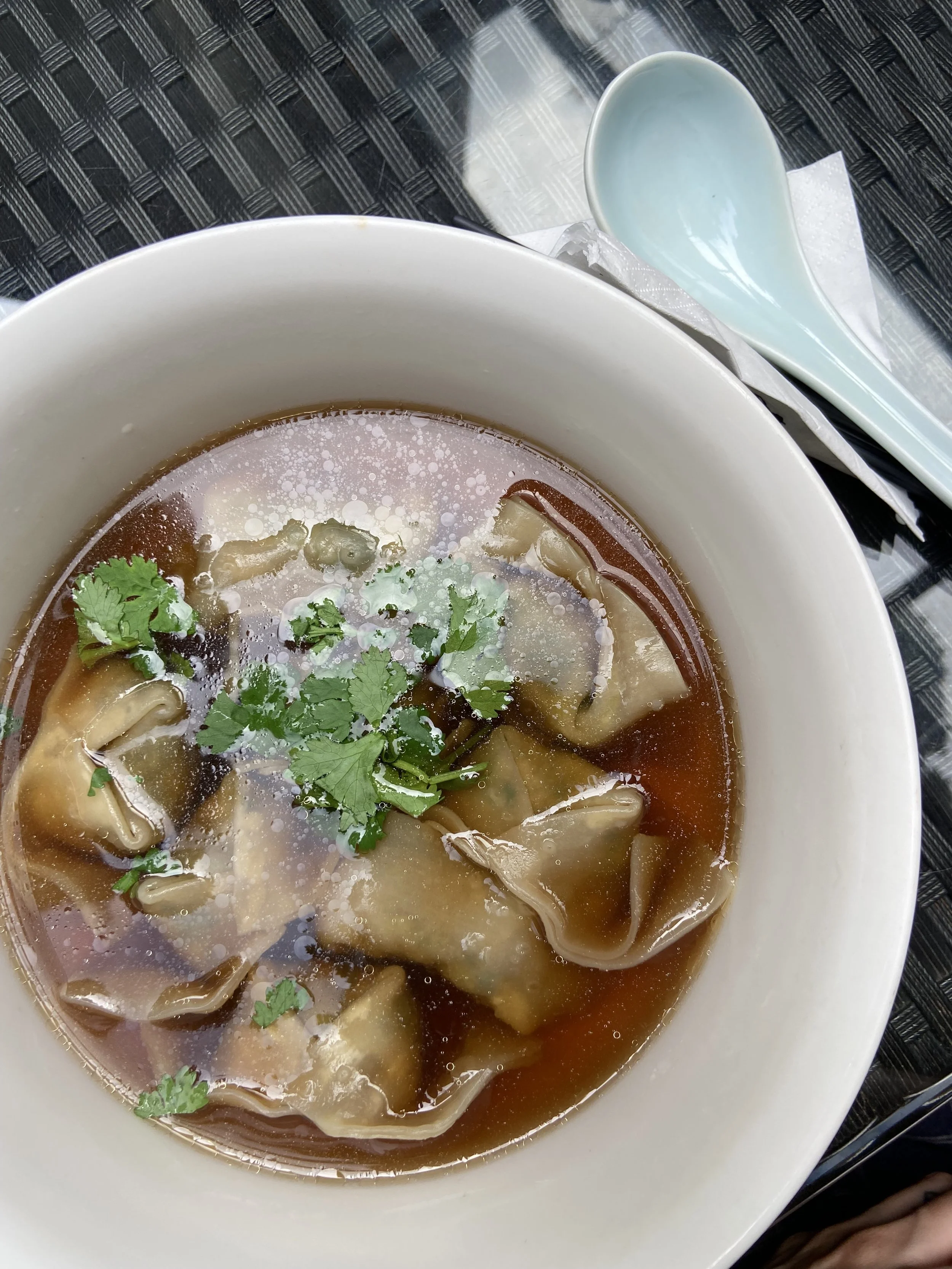
The first time I ordered 'pork' in a vegetarian restaurant in Shanghai, it arrived glossy, braised, and entirely made of wheat gluten.
That moment stuck with me, because the West likes to talk about plant-based meat as a new idea, something that was invented in a California lab around 2016. In China, it's ancient. And now, the country is trying to turn that old instinct into an industry at scale.
A cultural tradition: fake meat isn't new here
Long before Beyond Burger, Buddhist temple kitchens in China were perfecting "imitation meat", mock chicken from layered tofu skin, mock fish from konjac and seaweed, mock pork belly from seitan. Monks didn't eat meat, but guests and patrons expected a feast, so cooks learned to make vegetables behave like banquet food.
Shanghai's Gongdelin, a vegetarian restaurant founded in the 1920s, still serves these dishes today. Walk into almost any Chinese supermarket, and you'll find a whole aisle of the building blocks: dried tofu sticks, gluten, soy "chicken," fermented bean curd.
In fact, during my most recent trip back to Shanghai, I had lunch at Gongdelin and ordered their specialty: ‘pork wonton soup’, priced at just $ 3.50 USD equivalent.
This matters because the hardest problem for alt-protein companies in the US and Europe is persuading people that meat substitutes aren't weird. In China, that work was done centuries ago.
The problem Beijing is trying to solve: 100 million tonnes of soybeans
China eats roughly a quarter of the world's meat, and most of that is pork. The pigs eat soybean meal, and China imports most of its soybeans, on the order of 100 million tonnes a year, largely from Brazil and the United States.
For a government that thinks about food the way other governments think about oil, that is a vulnerability. Trade wars, droughts in Brazil, shipping disruptions - any of these can hit the price of dinner.
So the conversation in Beijing isn't really about animal welfare or even climate first. It's about food security.
The playbook: "big food" and a five-year plan
In late 2021, China's Ministry of Agriculture included cultivated meat and new protein sources in its five-year agricultural plan. This was the first time alternative proteins appeared in a national plan of this kind. Around the same time, Xi Jinping began promoting the "big food concept" (大食物观): the idea that food security means looking beyond grain and livestock to every possible source of calories and protein, such as forests, oceans, microbes, and fermentation.
If that sounds familiar, it should. It's the same pattern China used for solar and EVs:
Name the sector a national priority.
Fund research and local pilot programmes.
Build manufacturing capacity at a scale nobody else will match.
Drive costs down until the rest of the world buys from you.
Recent reports make the comparison directly. Systemiq's China's Food Future (April 2026) and the Good Food Institute APAC's China's Biomanufacturing Boom (July 2026) both describe provinces competing to host fermentation and biomanufacturing parks, and scenarios in which shifting protein sources could meaningfully cut soybean imports over the coming decades.
Three kinds of future protein, and where you'd meet them
It helps to split the industry into three lanes — and to think about where a traveller might actually bump into each one.
1. Plant-based meat. Chinese brands such as Zhenmeat, Starfield, and Hey Maet have launched plant-based dumplings, mooncakes, and burger patties, and international chains have tested plant-based items on Chinese menus.
2. Fermentation. This is where China's real strength lies. The country already dominates industrial fermentation for things like amino acids, vitamins, and food additives. Retooling those giant tanks to brew proteins via precision fermentation (microbes making specific proteins like dairy whey) or biomass fermentation (growing protein-rich microbes and fungi themselves) is a much shorter leap in China than almost anywhere else.
3. Cultivated meat. Startups such as Joes Future Food (cultivated pork) and CellX have been working on lab-grown meat, but as of writing, it isn't approved for sale in China. The Good Food Institute (GFI) APAC has found that 8 of the top 20 all-time patent applicants for cultivated meat are from China. This is the lane that gets the press and is probably the furthest from a dinner plate.
Why this should matter to you (even if you never visit)
Price. When China industrialises something, it gets cheaper for everyone. If fermented proteins follow the solar-panel curve, the alternative protein in your supermarket in 2035 may well be made with Chinese technology, or in Chinese tanks.
Taste culture. China doesn't need to persuade people to eat soy and gluten. Products built for Chinese palates could reset what "good" plant-based food means worldwide: less imitation burger, more braised, fermented, savoury.
Different motivations, same result. Western plant-based marketing leans on ethics and climate. China's leans on security and self-reliance. That pitch may hold up better through economic downturns.
What I'll be watching for
Whether cultivated meat gets its first Chinese approval and which city leads it.
How fast fermentation parks shift from vitamins and additives to food proteins.
Whether Chinese alt-protein ingredients begin appearing in products sold abroad.
Keep reading on Trove
China Visa Guide → if this piece makes you want to see for yourself
Sources
Systemiq, China's Food Future (April 2026)
Good Food Institute APAC, China's Biomanufacturing Boom (July 2026)
China Ministry of Agriculture and Rural Affairs, 14th Five-Year Agricultural Plan (Dec 2021)
USDA Foreign Agricultural Service — China soybean import data
