
What Asia Gets Right About Plant-Based Eating
Background
As the alternative protein industry struggles to move beyond early adopters in Western markets, I’ve continuously asked myself: Why are alternative protein products failing to drive repeat purchases and normalization into everyday habits? After spending years living across Asia while working with plant-based food companies entering Western markets, I’ve become increasingly fascinated by the way plant-based is so much more seemslessly integrated into life and culture in Asia. This has led me to become more convinced that the future of sustainable food adoption may depend less on ideological conversion and novel, buzz-worthy products and more on cultural integration.
I have spent the last 4+ years working for a consulting firm helping international plant-based food and ingredient companies enter and scale in the US market. I have worked with venture-backed startups from over 10 countries across all categories in plant-based: dairy, meat, eggs, ready meals, and even air protein. During this time, I have also been living, working, and travelling across various countries in Asia, including China, Korea, Vietnam, Thailand, and Laos. Throughout my time in Asia, I’ve witnessed the vast differences in food culture and approach to food systems innovations when compared to my home country, Canada, or our Western clients. This has inspired me to analyze the differences between the two and determine what insights can be gleaned during this current downturn in the alternative protein industry.
Western Framing vs Asian Normalization
In the West, plant-based eating is often marketed as identity. It’s usually tied to wellness culture, sustainability discourse, fitness trends, or moral positioning. Products are often marketed through the language of restriction, optimisation, or personal virtue: you’ll see claims all over packaging in the grocery stores advertising dairy-free, guilt-free, clean, low-carb, high-protein, cruelty-free. This type of marketing is completely baked in, as I’ve seen first-hand through my consulting work when we would conduct competitor analyses to determine which claims our clients should make in order to stand out in their category.
Even the term “plant-based” and especially “vegan” can feel extremely loaded and polarized: essentially signalling a lifestyle category and moral stance that has given these terms negative associations.
On the other hand, in much of Asia, plant-based is often simply part of existing food culture.
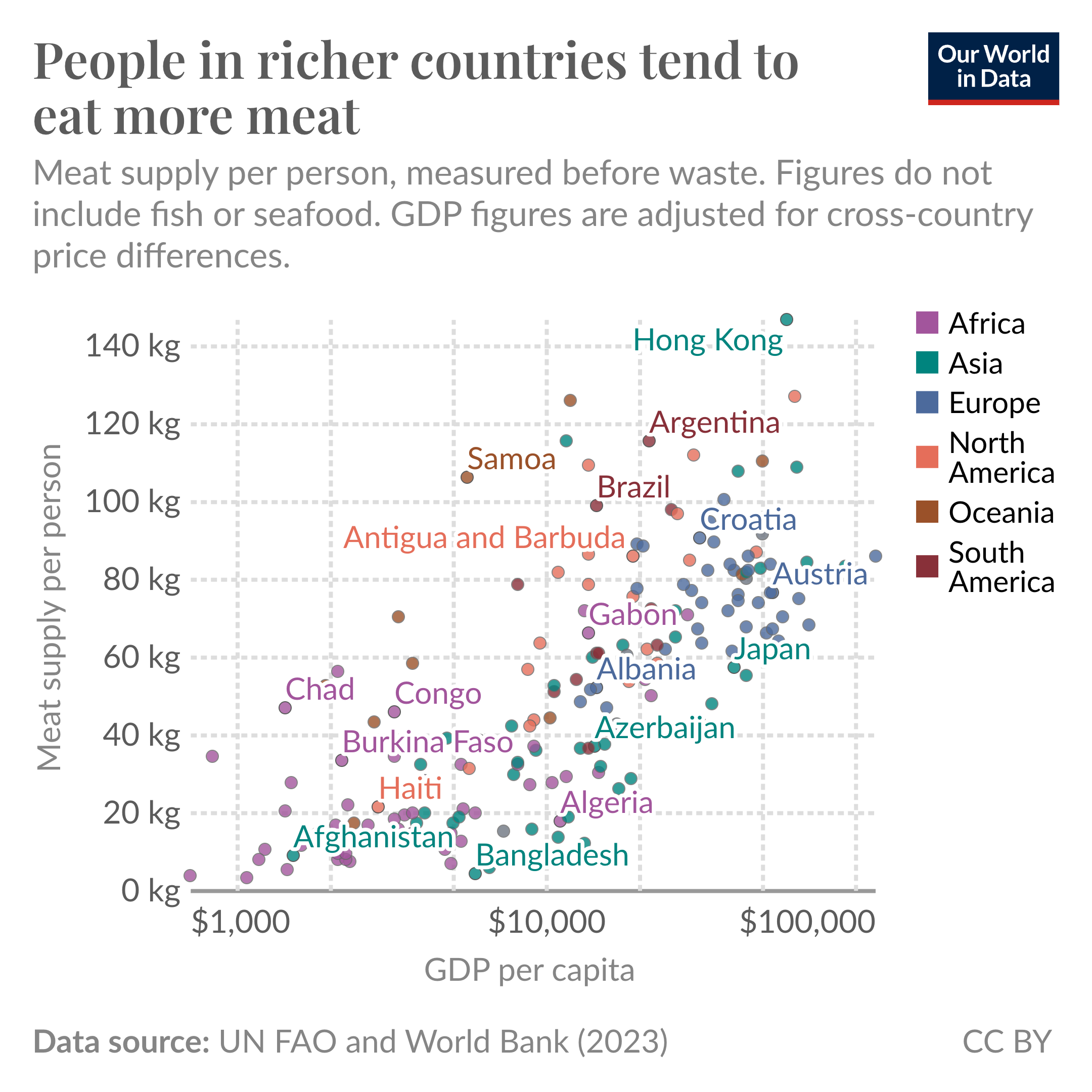
That’s not because Asia is plant-based, it absolutely isn’t, and as countries gain more economic power and consumers make more money, meat consumption only rises.
But plant-based foods often exist within a sense of cultural familiarity rather than consumer identity.
In Vietnam, Thailand, and other parts of Southeast Asia, I’ve noticed that plant-based eating frequently operates more through flexibility than purity. Many people may not identify as vegetarian or vegan, but still consume a wide range of naturally plant-forward meals as part of everyday life. There is a long-standing history of Buddhist vegetarian cuisine in many Asian countries, vegetable-heavy meals and side dishes are the norm, and consumers have historically had smaller meat portions and less access to meat due to economic conditions.
In the West, sustainable food conversations can sometimes become trapped in all-or-nothing thinking: fully vegan or not trying hard enough. But, as we’ve seen, large-scale food transitions will not happen through ideological conversion alone. They happen when sustainable choices become normalised, convenient, socially integrated, and easy to adopt incrementally.
And that’s where Asia offers a glimpse into what normalized plant-based adoption can actually look like.
The normalization of non-dairy products, soy-based foods, tofu, and plant-forward dishes in day-to-day life in many Asian markets suggests that consumers do not necessarily need to introduce an entirely new identity to change how they eat. Often, they simply need products that fit naturally into existing habits, routines, and cultural preferences.
I see that as ultimately being one of the most important lessons for the future of sustainable food adoption globally.
Accessibility & Affordability Matter
I think one of the biggest struggles with plant-based adoption in the West has been the perceived and real premium placed on many of the products. From my experience with clients, because alternative protein products are so capital-intensive in the beginning stages, their price points are often sky-high, making it very difficult for them to be competitive against their conventional counterparts. Sustainable food cannot remain premium-only. There are some exceptions to this that I have seen myself in many European countries, where retailers such as Lidl and Aldi offer very affordable plant-based protein products on their shelves, but ultimately, the perception remains, particularly in North American markets.
Lessons for FoodTech
The future of plant-based eating globally may depend less on ideological conversion and more on creating products that fit seamlessly into how people already live, eat, socialize, and consume.
Western markets may not have centuries of tofu traditions,Buddhist vegetarian history, or deeply normalized soy consumption in the same way many Asian cultures do. But that does not mean more widespread plant-based adoption is impossible. It simply means the path forward will likely look different.
Western consumers already have strong existing consumption habits and cultural systems built around food: coffee culture, convenience culture, fast-casual dining, snack culture, fitness and wellness trends, and, more recently, a growing interest in ‘clean eating’ and functional foods and beverages, with an estimated global market size of $373B in 2025, and growing. The companies that succeed will likely be the ones that integrate into these existing behaviors rather than attempting to completely reinvent them.
Consumers rarely change overnight because of ideology alone. More often, they embrace products incrementally when they become convenient, affordable, socially normalized, and embedded naturally into everyday routines. We are already seeing examples of this. Many consumers who would never identify as vegan regularly order oat milk in their coffee or choose plant-based options occasionally without making it part of their identity. You also hear stories from celebrities like Snoop Dogg, who served Beyond Meat burgers to his family without telling them, and they actually liked it! Conversely, you see Billie Eilish receiving extreme backlash online for arguing that “eating meat is inherently wrong” and that “you can’t love animals and eat meat at the same time.” Now, I’m not suggesting you should give food to people without their consent, and I still believe animal advocacy is necessary and that it 100% has its place in the future of food, but a more flexible adoption may ultimately be far more scalable than expecting mass ideological alignment.
This is where parts of the alternative protein industry may have miscalculated in recent years. Products such as Beyond Meat and Impossible Foods were symbols of radical innovation, as well as an additional choice at mealtime, another decision point for consumers to actively make. While both companies saw rapid early adoption, strong foodservice and retail expansion, and significant investor enthusiasm as they became emblematic of the future of food, growth has since slowed from its initial trajectory.
This is not to suggest that these companies failed to appeal to meat eaters and the broader market; in fact, a core part of their strategy was to do just that by replicating the experience of meat without requiring a dietary identity shift. The more subtle limitation was that, while they succeeded in creating convincing substitutes, they largely remained “choices” within the category rather than becoming default options embedded into everyday eating routines. In practice, this meant consumers still had to actively opt in to plant-based alternatives, rather than encountering them as the most natural or frictionless option in a given context. Combined with high price premiums and ongoing perceptions around ultra-processed foods, this limited their ability to move from early adopters into sustained, repeat mainstream consumption.
So what can Western markets learn from Asia?
Not that they should attempt to replicate Asian food culture, but that sustainable food consumption may happen more easily when products feel familiar, accessible, and naturally integrated into existing routines rather than positioned as symbols of a new lifestyle.
Technology alone cannot determine the future of food. Culture, affordability, convenience, and consumer behavior will shape it just as much. What we need is products to become so affordable, convenient, culturally integrated, and normalized that consumers choose them almost without thinking about it at all.
There are still many questions to be answered and paths to be carved to find the right solution to this global challenge. I will leave you with a few:
In a system driven more by habit and price constraints rather than ideology, what really drives long-term food adoption?
What would plant-based food need to change in order to become the default rather than the alternative?
Has the industry focused too much on convincing consumers — and not enough on reshaping defaults?
What can we learn from the plant-based milk category, which has fared the best by far?
Read my article on the widespread adoption of Oatside in cafes across Southeast Asia.
